
Wondering if Kerala is actually worth visiting in the cooler months? Yes, but only if you build the route around slow water travel, hill weather and realistic wildlife expectations. The best version of the trip links Alappuzha, the spice country around Thekkady and Periyar Tiger Reserve without trying to force every famous stop into one week.
What is the best Kerala route for seven days?
My clear pick is Kochi, Alappuzha, Thekkady and Kochi. It gives you backwaters, spice gardens and wildlife without turning the holiday into a sequence of five-hour car rides. Add Munnar only if you have at least nine days. Munnar is beautiful, but squeezing it between Alappuzha and Thekkady creates more road time than most travelers expect.
The route I would choose
| Route | Nights | Travel reality | Verdict |
|---|---|---|---|
| Kochi to Alappuzha to Thekkady to Kochi | 1, 2, 3 | Shorter transfers and two full days in the reserve area | Best seven-day plan |
| Kochi to Munnar to Thekkady to Kochi | 1, 2, 2 | Strong hill scenery, no proper backwater stay | Choose only if hills matter most |
| Kochi to Alappuzha to Kumarakom to Kochi | 1, 2, 2 | Easy water-focused trip with little wildlife | Best for a quiet couples trip |
| Kochi to Alappuzha to Munnar to Thekkady to Kochi | 1, 2, 2, 2 | Usually requires nine days to avoid rushing | Best longer itinerary |
When Munnar belongs in the plan
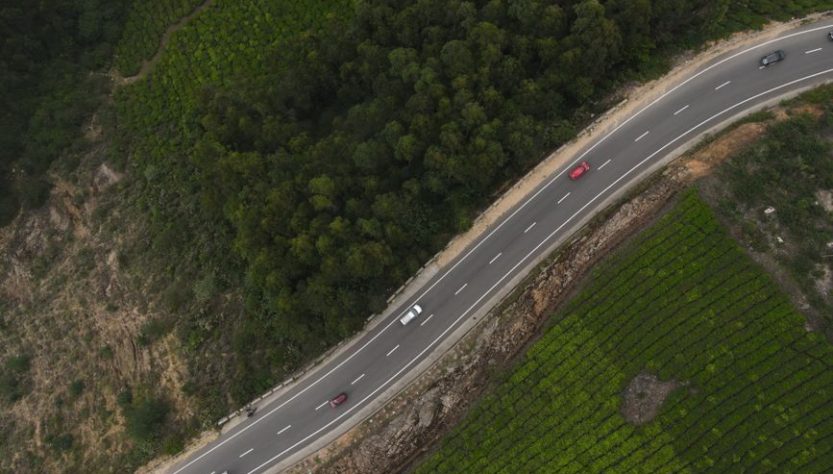
Munnar earns its place when tea estates, high viewpoints and cooler nights matter more than boating. The drive from Alappuzha to Munnar can take roughly four to five and a half hours, depending on traffic and the chosen road. The drive from Munnar to Thekkady often takes another three and a half to five hours. That is manageable on a longer holiday, but it is a poor use of time on a six-night trip.
For a first visit, spend two nights in Alappuzha and three in Thekkady. Thekkady gives you both the spice hills and access to Periyar, so it covers more of the brief in one base.
How do you experience the backwaters without wasting a day?
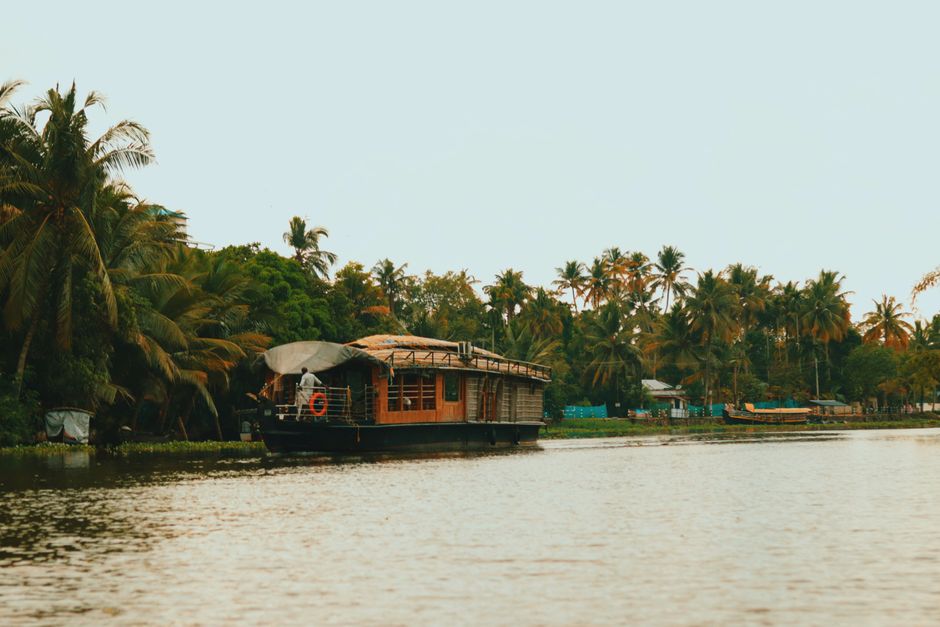
The best backwater plan is not automatically an overnight houseboat. For most first-time visitors, one well-timed overnight cruise is enough. The scenery changes slowly, and a second full day on the same canal can feel repetitive if you have limited time.
Start with the water, not the boat brochure
- Choose Alappuzha for movement. It has more boat traffic, working canals, village edges and access to longer routes. Pick Kumarakom instead if you want a quieter lake setting and a more polished resort base.
- Board around midday. A typical houseboat itinerary begins around noon, serves lunch after departure, cruises for several hours and moors before dark. You will see more working life during daylight than during a late boarding.
- Ask where the boat moors. A boat can spend much of the evening beside a busy road, another vessel or a loud generator. The overnight location matters as much as the interior.
- Use a smaller boat for narrow canals. Large vessels look impressive but cannot enter every waterway. A smaller two-bedroom boat often delivers better village views and less engine noise.
Choose your night on the water carefully
A one-night kettuvallam stay works best when the boat includes a private cabin, screened windows, a clean bathroom and a fixed meal schedule. Do not assume every boat offers the same experience. Some focus on polished interiors and spend most of the route on open lake water; others are older but reach quieter canals.
If you dislike slow travel, skip the overnight stay and take a daytime cruise or a public ferry instead. That choice leaves more time for Thekkady. The backwaters are not a theme-park ride. They are a living transport and farming system, and the strongest moments come from watching people work rather than collecting views from the deck.
Why do the spice hills deserve two nights?
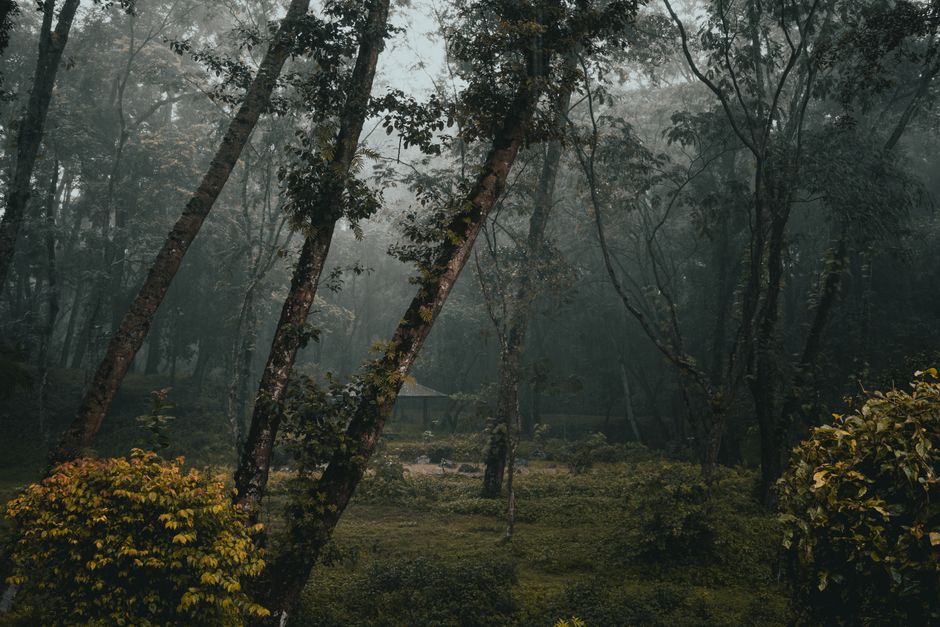
The spice hills are not filler between the coast and the wildlife reserve. They explain why Thekkady feels different from lowland Kerala. The air is cooler, the roads climb through dense forest and small farms, and the landscape shifts from coconut palms to cardamom, pepper, coffee and tea. Thekkady is the better hill base for this specific trip because it combines mountain scenery with direct access to Periyar.
The cool season is cooler, not cold
From roughly December through February, mornings in the highlands can feel crisp, especially before sunrise. Afternoons are usually comfortable, but sunshine still feels strong at exposed viewpoints. Coastal Alappuzha remains warmer and more humid, so pack for two separate climates rather than assuming the whole state has one winter temperature.
Rainfall is usually lower than in the monsoon months, but showers can still appear. Roads become slippery near forest edges, and mist can hide viewpoints. That is not a reason to cancel. It is a reason to leave margin in the schedule and avoid booking a tight same-day connection after a hill drive.
Munnar or Thekkady?
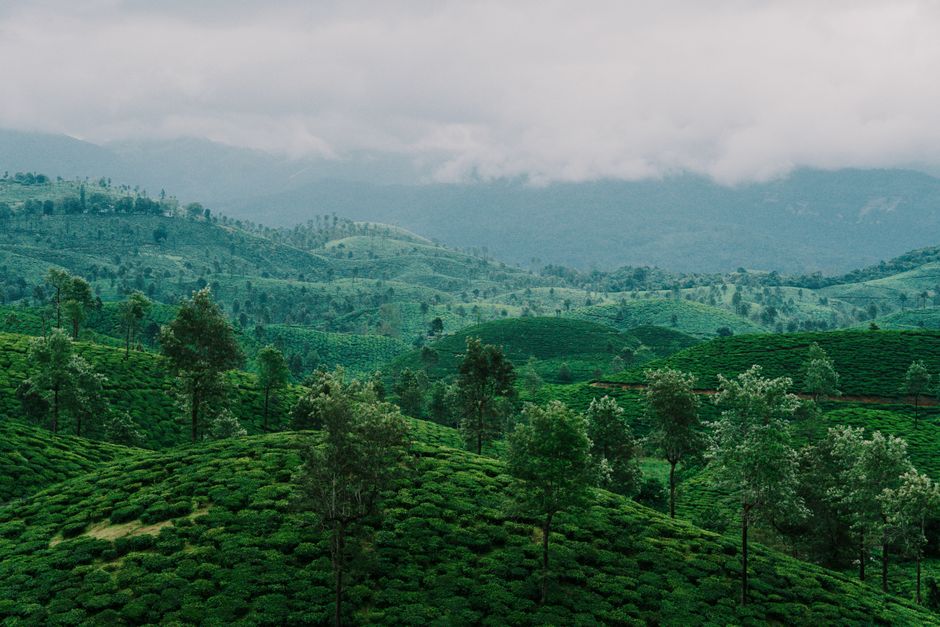
Choose Munnar for broad tea estates, higher viewpoints and a more open mountain landscape. Choose Thekkady for forest, spice farms and wildlife. Munnar has the stronger postcard scenery; Thekkady has the stronger mix of experiences. For a route built around backwaters, spice hills and Periyar, Thekkady wins.
What should you pack?
- Light trousers and breathable shirts for Alappuzha.
- A thin fleece or long-sleeved layer for early mornings in Thekkady and Munnar.
- Closed shoes with grip for spice walks and forest trails.
- Insect repellent, sunscreen and a reusable water bottle.
- A rain shell that fits over a small daypack.
Leave heavy winter clothing at home. A warm layer is useful; a full cold-weather wardrobe is dead weight.
Can you really see wildlife in Periyar?
Yes, but do not book Periyar expecting a guaranteed tiger sighting. The reserve is better understood as a forest ecosystem where elephants, gaur, sambar deer, wild boar, macaques and waterbirds are more realistic sightings. Tigers exist, but they stay hidden, and a boat passenger has no control over that.
What does the official boat cruise show?
The Periyar Tiger Reserve official boat cruise usually lasts about two hours and follows the reservoir edge. It is an easy introduction to the reserve, especially for families or travelers who do not want a long walk. The boat gives you a wide view of the waterline, where elephants and sambar may appear, but it can also be crowded and noisy. Treat it as a useful first layer, not the complete wildlife experience.
Is a guided walk better than a boat?
For close forest detail, yes. A guided nature walk or bamboo-rafting programme can reveal tracks, calls, insects and plants that a boat simply misses. These activities require more walking and usually start early, so they suit visitors willing to trade comfort for better observation. My verdict is simple: book one boat outing and one guided land-based activity if wildlife is central to the trip.
What causes a disappointing reserve visit?
The common mistakes are arriving at midday, allowing only one night in Thekkady and treating rain or silence as failure. Wildlife viewing is not a zoo visit. Wear quiet clothing, keep phones muted and listen to the guide. A forest with no large animal can still deliver an excellent morning if you notice fresh tracks, alarm calls or a herd moving through thick cover.
What is the smartest seven-day budget and stay plan?
Spend your money on location and time, not the fanciest room. A practical 2026 trip needs two nights near the backwaters and three near Thekkady. That structure gives you room for a weather delay and avoids paying for a luxury stay while spending the whole day inside a car.
A realistic planning envelope
- Mid-range rooms: allow roughly ₹3,000 to ₹12,000 per double room per night, with major variation by weekend and season.
- Private overnight houseboat: allow roughly ₹8,000 to ₹20,000 per boat for a basic to comfortable one-night stay, then confirm meals, cabin count and boarding time.
- Private road transfers: allow roughly ₹3,500 to ₹6,500 per vehicle per day for a standard car, depending on distance and waiting time.
- Reserve activities: keep a separate allowance for the official boat cruise, guided walks and local transfers because each uses a different booking channel.
These are planning ranges, not fixed tariffs. Kerala prices move with weekends, school holidays, boat size and room type.
Which named stays and services make sense?
The Kerala State Water Transport Department Alappuzha–Kottayam ferry is a practical public-water alternative to a private cruise and can turn a transfer into a genuine local journey. KTDC Lake Palace offers an island setting in the Vembanad backwaters, but it makes more sense for travelers who value the stay itself than for people chasing a tight route. In Thekkady, CGH Earth Spice Village uses separate cottage-style units rather than a tower hotel, while KTDC Periyar House is the more practical choice when reserve access matters more than boutique design.
Do not book an expensive houseboat if you hate confined spaces, get seasick or need a packed sightseeing schedule. Choose a land hotel in Alappuzha and take a daytime cruise instead. The single most important takeaway is simple: give Kerala’s cool season at least seven unhurried days, with two nights on the water and two or three around Thekkady, because the region rewards time more than checklist speed.